
The words “Orthopedic” and “orthopaedic” are two different spellings of the same word, which refers to the branch of medicine dedicated to conditions affecting the musculoskeletal system. The difference between the two spellings lies in their origin and usage in different parts of the world. Orthopaedic is the standard British English spelling, while orthopedic is the preferred spelling in the United States.
To learn more about the field of orthopedics, we invite you to read the following article. You can also contact us today at OrthoNeuro if you have any questions about our orthopedic treatment options. We have multiple locations throughout Columbus, Ohio.
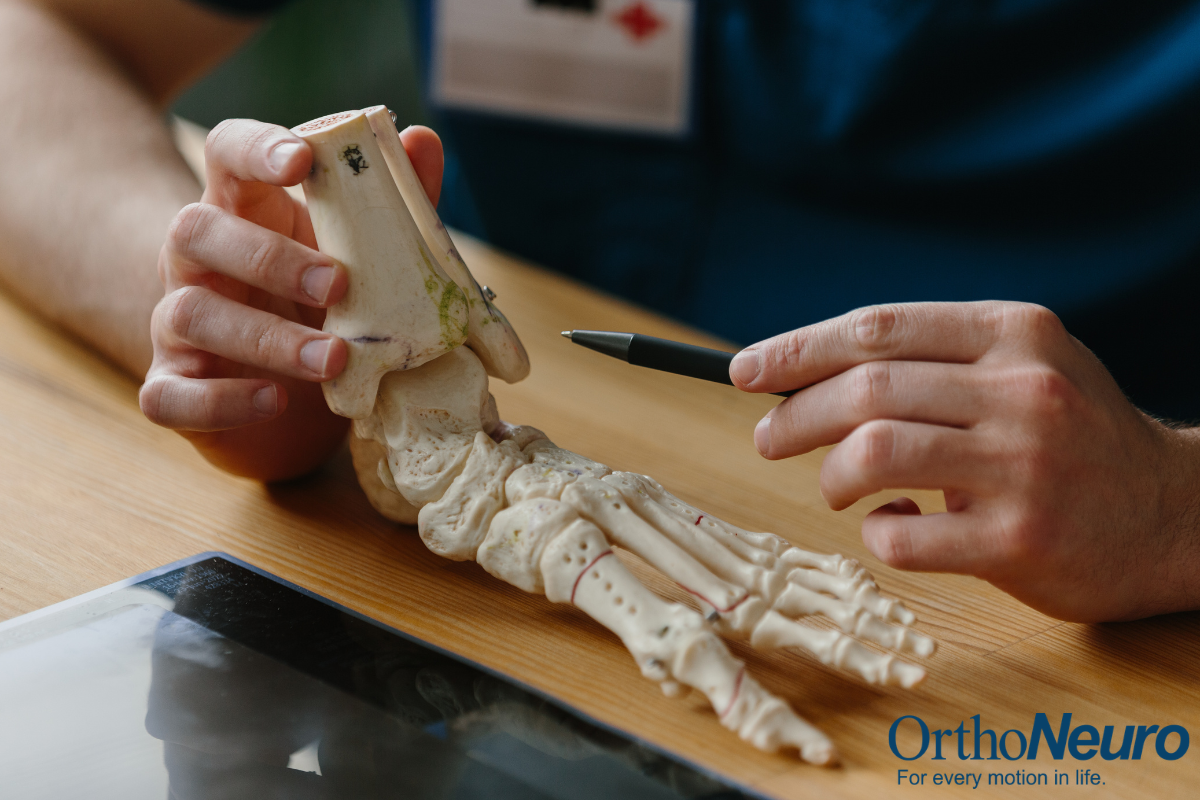
Orthopaedic medicine has a long and fascinating history. The origins of the field can be traced back to the ancient Greeks, who were among the first to recognize the importance of exercise and physical therapy in treating injuries and deformities.
In the 18th century, orthopedic surgery gained recognition as a medical specialty. The term “orthopedics” was coined by a French physician named Nicolas Andry in 1741, who derived it from the Greek words “ortho” (straight) and “pais” (child). This was because orthopedics was originally developed to correct deformities and injuries in children.
During the 19th century, orthopaedic surgery evolved rapidly, with the introduction of new surgical techniques and the development of orthopaedic devices and appliances, such as braces, crutches, and prosthetic limbs. In the United States, the American Orthopaedic Society was established in 1887, and the first orthopedic hospital was opened in New York City in 1863. Major US bodies such as the American Academy of Orthopaedic Surgeons still keep the “ae” spelling out of historical commitment to the field’s roots.
Orthopedic surgery continued to advance throughout the 20th century, with the development of new surgical procedures, such as joint replacements, and the use of advanced imaging techniques, such as X-rays and MRI scans, for diagnosis and treatment planning.
Today, orthopedic medicine is a rapidly growing field, with orthopedic specialists treating a wide range of musculoskeletal issues affecting bones, muscles, and nerves. These can include conditions from fractures and sprains to arthritis, spinal disorders, sports injuries, joint pain, and diseases related to the musculoskeletal system. Orthopedic care includes both surgical and non-surgical treatment options, and they work closely with other healthcare professionals, such as physical therapists and sports medicine specialists, to provide comprehensive care to their patients.
Minimally invasive surgeries have become increasingly popular in the field of orthopedics, allowing for smaller incisions, less pain, and quicker recovery times for patients. Robotic surgery is another advancement in modern orthopedics, providing surgeons with more precise control during procedures.
Orthopedic surgeons are medical professionals who diagnose and treat patients with musculoskeletal conditions.
Choosing an orthopedic surgeon can be a daunting task, particularly if you’re facing a musculoskeletal condition or injury that requires specialized treatment. Orthopedic surgery is a branch of medicine dealing with the prevention, diagnosis, and treatment of disorders and injuries of the musculoskeletal system. To ensure that you receive the best possible care, it’s crucial to look for certain qualities and qualifications when choosing an orthopedic surgeon.
First and foremost, it’s essential to ensure that your orthopedic surgeon has received proper training and education. Typically, an orthopedic surgeon will attend medical school, followed by a residency program that focuses on orthopedic surgery. During this training, they will learn the necessary surgical and non-surgical treatments for musculoskeletal conditions.
It’s also important to look for orthopedic surgeons who are members of the American Association of Orthopaedic Surgeons (AAOS). Membership in this professional organization indicates that the surgeon has met rigorous standards for training, education, and ethical practice. The AAOS provides a variety of resources to help patients find qualified orthopaedic surgeons in their area.
Another essential factor to consider when choosing an orthopedic surgeon is their level of experience. You may want to ask how many surgeries they’ve performed related to your specific condition and what their success rates are. An experienced surgeon with a track record of successful outcomes may provide you with more confidence and peace of mind as you prepare for your procedure.
Communication skills are also critical when choosing an orthopedic surgeon. You want a surgeon who takes the time to listen to your concerns, explain your diagnosis and treatment options, and answer any questions you may have. Clear and open communication can help you feel more comfortable and confident in the care you’re receiving.
At OrthoNeuro, we are committed to providing our patients with the highest quality of orthopedic care. Our team of board-certified orthopedic surgeons and physicians is dedicated to helping you achieve the best possible outcomes.
We offer a wide range of orthopedic services, including joint replacement, sports medicine, spine surgery, hand surgery, foot and ankle surgery, and more. Our state-of-the-art facilities are equipped with the latest technology to ensure you receive the most advanced and effective treatments.
What sets us apart is our patient-centered approach. We take the time to listen to your concerns, answer your questions, and work with you to develop a personalized treatment plan that meets your unique needs. Our goal is to help you return to the activities you love as quickly and safely as possible. Contact us today to schedule an appointment with one of our experienced orthopedic surgeons in Columbus, OH!
No. Orthopaedic and orthopedic refer to the same medical specialty. The only difference is spelling: “orthopaedic” is traditionally used in British English and by some professional organizations, while “orthopedic” is the preferred spelling in the United States.
Orthopedic specialists diagnose and treat a wide range of musculoskeletal conditions, including fractures, arthritis, sports injuries, joint pain, spinal disorders, tendon and ligament injuries, and other conditions affecting the bones, muscles, joints, and nerves.
No. Many orthopedic conditions can be successfully treated with non-surgical options such as physical therapy, medication, injections, bracing, activity modification, or other conservative treatments. Surgery is typically recommended only when these approaches are not effective or the injury is severe.
Look for a board-certified orthopedic surgeon with experience treating your specific condition. It’s also important to choose someone who communicates clearly, explains your treatment options, answers your questions, and develops a personalized care plan.
Modern orthopedics has benefited from innovations such as minimally invasive surgery, robotic-assisted procedures, advanced imaging technology, improved joint replacement techniques, and comprehensive rehabilitation programs, all of which can help improve outcomes and shorten recovery times.